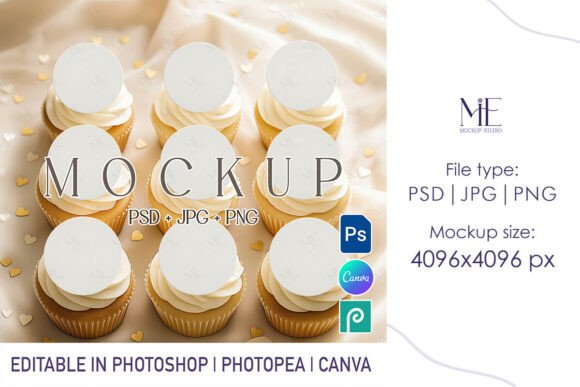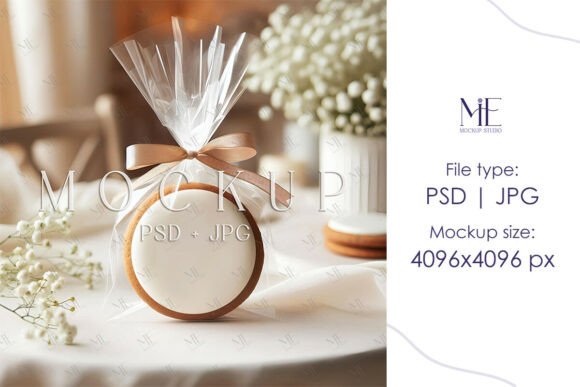
Sugar Cookie Mockup Round Cookie Label Guide
Visualizing a product before it exists in the physical world is one of the most powerful tools available to modern creators. Whether you are a home baker planning a holiday gift or a branding agency pitching a new client, the ability to see your design applied to a realistic surface changes how you approach creativity. This is where a Sugar Cookie Mockup Round Cookie Label becomes an essential asset. It is not merely a digital image; it is a bridge between a flat concept and a tangible reality, allowing you to test ideas, refine aesthetics, and present work with professional polish without the cost of baking hundreds of test batches.
At its core, this tool is a high-resolution digital template, typically provided as a PSD file with Smart Object layers. When you open the file in Photoshop, you can simply double-click a specific layer, paste your artwork, and save. The software automatically wraps your design around the curvature of the cookie, applies the texture of the icing, and adjusts lighting and shadows to match the environment. The result is a photorealistic representation of a round sugar cookie topped with your custom label or icing design. For many, the appeal lies in the efficiency; what once took hours of photography setup and editing now takes minutes.
Why Different Creators Value Realistic Previews
The value of a Sugar Cookie Mockup Round Cookie Label shifts depending on who is holding the mouse. A freelance graphic designer might prioritize speed and client presentation, while a small business owner might focus on cost-effectiveness and marketing versatility. Understanding these differing priorities helps you decide if this specific template fits your workflow.
For entrepreneurs and small business owners, particularly those in the cottage food industry, cash flow and inventory management are critical. Ordering custom-printed edible labels or committing to a large batch of decorated cookies based on a digital sketch carries financial risk. If the colors look different in print or the logo feels too crowded on a 3-inch circle, money is lost. By using a mockup, these business owners can validate their packaging and product design digitally first. They can share these images on social media to gauge customer interest before producing a single cookie. This "test before you invest" approach reduces waste and ensures that when they do launch, the product looks exactly as advertised.
Conversely, professional designers and marketers often use these templates to elevate their portfolios. A flat JPEG of a logo tells a client very little about how that brand lives in the real world. Placing that same logo on a textured, iced cookie demonstrates an understanding of scale, material, and context. It shows attention to detail. For a marketer running a holiday campaign, having a library of seasonal mockups allows for rapid creation of ads and social posts. They can swap out designs for different clients instantly, maintaining a consistent, high-quality visual standard across various projects without needing a photoshoot budget.
Accessibility for Beginners and Hobbyists
You do not need to be a Photoshop expert to benefit from these tools. One of the primary barriers to entry for many hobbyists is the perceived complexity of editing software. However, modern mockup templates are designed with inclusivity in mind. The use of Smart Objects simplifies the technical process significantly. A beginner or hobbyist planning a birthday party or a wedding favor can achieve results that look like they were shot by a professional photographer.
Consider a parent organizing a school bake sale or a family reunion. They want their treats to look special but may lack the skills to pipe intricate icing designs by hand. Using a digital mockup, they can design a cute label in a free online editor like Canva, import it into the PSD file, and generate a stunning image to put on their invitation or flyer. This boosts confidence and excitement for the event. The learning curve is minimal: download, open, double-click, paste, save. The immediate visual feedback encourages experimentation with fonts, colors, and layouts that they might otherwise be too afraid to try.
Educational and Commercial Applications
In an educational setting, such as a culinary arts class or a graphic design workshop, these mockups serve as excellent teaching aids. Instructors can assign projects where students must design packaging for a hypothetical bakery product. Instead of requiring students to bake and decorate cookies for every iteration of their design—which is time-consuming and messy—they can use the Sugar Cookie Mockup Round Cookie Label to rapidly prototype. This allows the focus to remain on design principles, color theory, and branding strategy rather than the logistics of food preparation.
For publishers and content creators, specifically food bloggers and recipe developers, visuals are the currency of the internet. High-quality images drive engagement. Sometimes, a recipe is ready to be published, but the actual cookies didn't photograph well due to lighting issues or melting icing. A mockup provides a reliable alternative. It ensures that the blog post or cookbook looks polished and appetizing, maintaining the creator's reputation for quality. Furthermore, because the file is digital, it can be used repeatedly for different recipes, offering long-term usefulness that outweighs the initial cost.
Key Features That Drive Decision Making
When evaluating whether to acquire a specific mockup template, several practical factors come into play. These priorities often dictate the purchase decision:
- Resolution and Quality: Professional work demands high resolution. A template offering 4096x4096 pixels ensures that the final image remains crisp even when cropped for Instagram stories or printed for large posters. Blurry edges can ruin an otherwise great design.
- Flexibility and Editability: The best templates allow you to change more than just the image. While the Smart Object handles the main design, the ability to adjust background colors or lighting in the PSD gives users control over the mood of the shot.
- Size Accuracy: Knowing that the label area corresponds to a real-world measurement, such as a perfect fit at 3x3 inches, is crucial for printers and bakers. It ensures that what you see on screen matches the physical constraints of the actual cookie.
- Speed of Workflow: For freelancers working under tight deadlines, the "instant download" aspect is vital. There is no waiting for shipping; the tool is available immediately after checkout, allowing work to commence right away.
Making the Right Choice for Your Project
Ultimately, deciding to use a Sugar Cookie Mockup Round Cookie Label comes down to your specific goals. If you are looking to sell physical cookies, this tool helps you market them effectively before production. If you are a designer selling digital files, this mockup becomes part of your product listing, showing buyers exactly how their purchase will look. If you are a hobbyist, it adds a touch of professionalism to your personal projects.
The versatility of the round shape makes it universally applicable. Round labels are standard for jars, tins, and the cookies themselves. By mastering this simple digital tool, you gain the ability to present your ideas with clarity and confidence. Whether you are driven by the need for commercial viability, the desire for creative expression, or the practicality of saving time, integrating realistic mockups into your workflow is a strategic move. It transforms abstract ideas into visible assets, helping you communicate your vision more effectively to whatever audience you are trying to reach.