Elevate Your Brand with the "Your Lashes is My Canvas" Lash Tech Apron Design
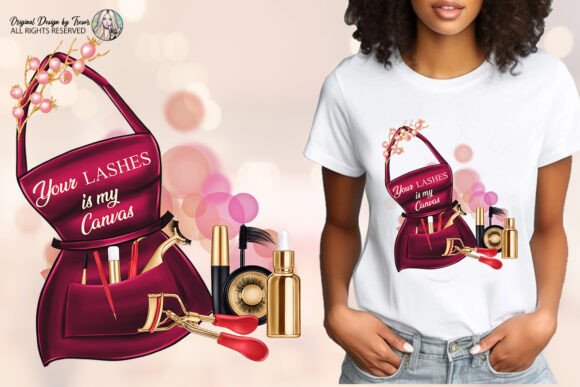
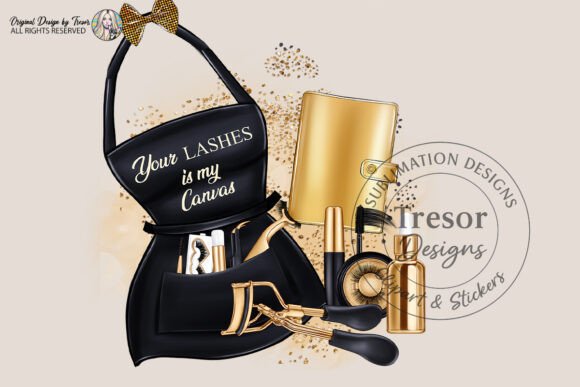
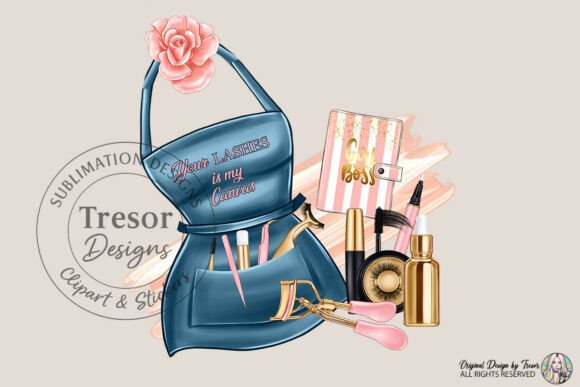
In the competitive world of beauty and aesthetics, your visual identity is often the first conversation you have with a potential client. The "Your Lashes is My Canvas" Lash Tech Apron design represents more than just a piece of clothing; it is a statement of artistry and professionalism. This gorgeous digital clipart features an elegant steel blue apron adorned with a delicate pink rose, embodying a romantic yet ultra-glam aesthetic. However, simply purchasing a high-resolution file is not enough to guarantee success. Many entrepreneurs and creators stumble when integrating such assets into their business strategy, often overlooking critical details regarding resolution, application methods, and brand consistency.
Understanding what this design offers is the first step toward leveraging it effectively. The artwork depicts a professional setup with pockets filled with essential tools like pink tweezers, a mascara spoolie, and a lash applicator brush. Surrounding the central apron are luxury accessories, including a pink and gold lash curler, a "Girl Boss" gold glitter planner, and a rose gold brushstroke background. While the visual appeal is undeniable, the true value lies in how you deploy this 3600px x 3600px transparent PNG across your various touchpoints. Whether you are a lash salon owner, a beauty blogger, or a hobbyist creating custom merchandise, avoiding common pitfalls will ensure your final product looks as premium as the design itself.
Misunderstanding Resolution and Print Requirements
One of the most frequent errors creators make involves misinterpreting digital resolution versus print quality. This specific design is delivered as a high-resolution PNG at 300 DPI, measuring approximately 12" x 12". While this is excellent for many applications, confusion often arises when users attempt to scale the image beyond its intended limits or use it on materials that require vector graphics. If you try to stretch this raster image to cover a large banner or a full-wall mural, you risk pixelation, which can severely damage your brand's perceived quality.
To avoid this, always check the dimensions before sending files to print. For sublimation printing on tumblers, tote bags, or the apron itself, the 3600px width is generally sufficient for high-quality results. However, if you are planning to use this for large-format signage, consider hiring a graphic designer to recreate the elements as vectors or ensure your printer can handle the specific pixel density you have. A blurry logo on a storefront window sends a message of carelessness, whereas a crisp image on a uniform conveys expertise.
Overlooking Color Accuracy in Sublimation
The charm of this design lies in its specific color palette: the steel blue of the apron, the soft pink of the rose, and the gleam of gold accents. A common mistake occurs during the sublimation process when color profiles are not managed correctly. Digital screens display colors in RGB (Red, Green, Blue), while printers often utilize CMYK (Cyan, Magenta, Yellow, Key/Black) or specific dye-sublimation inks. Without proper calibration, the elegant steel blue might print as a muddy gray, or the gold glitter effect on the planner could lose its metallic shine, appearing as a flat yellow.
Before committing to a large batch of products, always run a test print on the actual material you intend to use. Different fabrics and coatings absorb ink differently. For instance, the gold elements may pop beautifully on a coated tumbler but appear dull on a cotton tote bag. Adjusting your printer settings or using color correction software can save you from wasting inventory and ensure the romantic, feminine touch of the pink rose remains vibrant and true to the original digital file.
Neglecting Brand Consistency Across Platforms
Another overlooked detail is the inconsistent application of branding assets. You might use the "Your Lashes is My Canvas" design on your physical apron but fail to incorporate similar visual elements into your social media content or business cards. This disconnect confuses customers and weakens brand recall. The design includes versatile elements like the lash wand, serum bottle, and mirror, which can be extracted or used as complementary graphics to create a cohesive look.
A better approach is to develop a mini brand kit using the assets provided. Use the rose gold brushstroke background for your Instagram story highlights or the pink striped planner graphic for your email newsletter headers. By maintaining a consistent visual language, you reinforce your identity as a "Girl Boss" who pays attention to details. This consistency builds trust; clients feel they are entering a unified, professional environment whether they are viewing your website or sitting in your salon chair.
Choosing the Wrong Application Method
Not all surfaces are created equal, and applying this design without considering the substrate can lead to premature wear and tear. While the file is perfect for sublimation on polyester-based fabrics and coated hard goods, it may not adhere well to certain materials without additional steps. For example, attempting to iron-on this design directly onto a 100% cotton apron without using a heat transfer vinyl (HTV) intermediary or a specialized printer will result in the image washing out after the first laundry cycle.
If you plan to use this on natural fibers like cotton tote bags or canvas, consider using a professional print-on-demand service that specializes in direct-to-garment (DTG) printing, or convert the design for use with high-quality HTV. Always read the care instructions associated with your chosen printing method. Educating yourself on the limitations of each technique ensures longevity and keeps your branding looking fresh, rather than cracked and faded.
Failing to Verify Licensing and Usage Rights
Finally, a critical but often ignored aspect is understanding the licensing terms of digital clipart. While this file is marketed for commercial use in branding, stickers, and planners, it is vital to confirm whether you can resell the file itself or only the physical/digital products created with it. Misunderstanding these terms can lead to copyright strikes or legal issues, especially if you are selling templates or digital scrapbooking kits.
Always review the license agreement included with your download. Typically, you are permitted to use the design on end products like mugs, shirts, and marketing materials, but redistributing the raw PNG file is usually prohibited. Respecting these boundaries protects your business reputation and ensures you can continue to use high-quality assets like this steel blue apron design without interruption.
Practical Steps for Success
- Test Before Scaling: Print a small sample to verify color accuracy and resolution before ordering bulk quantities.
- Match Material to Method: Ensure you are using sublimation for polyester/coated items and DTG or HTV for cotton fabrics.
- Create a Cohesive Kit: Extract individual elements like the tweezers or rose to use across social media and print collateral for a unified look.
- Check License Terms: Confirm exactly how you are allowed to use the file to avoid intellectual property violations.
- Maintain File Integrity: Store the original transparent PNG in a safe location and work on copies to prevent accidental corruption of the master file.
By approaching the "Your Lashes is My Canvas" Lash Tech Apron design with a strategic mindset, you transform a simple graphic into a powerful branding tool. Paying attention to technical details, respecting material limitations, and maintaining visual consistency will help you avoid costly mistakes. Ultimately, the goal is to let your creativity shine while presenting a polished, professional image that resonates with your audience and elevates your business in the beauty industry.